


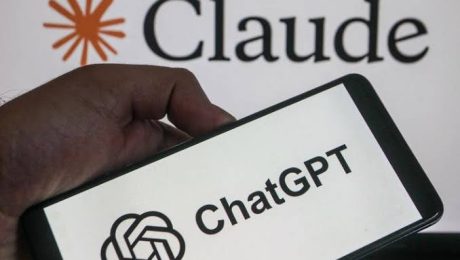
A three person research team broke into OpenAI last month. They used Anthropic’s Claude to do it, and the entire operation took less than 72 hours. (TechCrunch, The Register) It was a legitimate bug bounty exercise, fully authorized, and OpenAI paid the team $6,500 for finding the holes. Nobody stole anything. That part of the story isn’t actually what should worry you.
I read the headline the same way most people probably did, half expecting a genuine attack, and had to go back and read the actual reporting to understand what happened. It turned out to be closer to a stress test than a heist. That distinction matters. So does the speed at which it happened, and that’s the part I don’t think is getting enough attention.
What Happened
The researchers, a small security firm called Hacktron AI, found a vulnerability in the software running OpenAI’s public community forum. They used Claude Opus 4.8 to try building an exploit and got stuck on a security feature that blocked the attack. A day later, Anthropic released Claude Opus 5. The team switched models, and the new version cleared the exact hurdle that had stopped the old one. From there they took over an OpenAI employee’s account, reached the company’s private code repository, proved it with a harmless pull request, and reported everything before touching anything sensitive. OpenAI patched the holes within 14 hours.
The Part That Worries Me
What stops me isn’t that a security team found a flaw. Security teams find flaws every week, that’s the job. What stops me is the 24 hours between a model failing at a task and the next version of that same model succeeding at it. Whatever assumptions your firm made about what AI can or can’t do six months ago, some of them are already wrong, and the gap keeps shrinking.
I’ve said some version of this before: AI is not magic, and it’s only as good as the intent and oversight behind it. That part is still true. What’s changed is how fast the distance between “can’t” and “can” closes, and most businesses, mine included, are not built to reevaluate that distance every quarter.
Nobody’s Incentivized to Slow This Down
Here’s my honest, entirely unqualified read on why the conversation about slowing down never seems to land anywhere. I’m not an economist, and I could be wrong about this. But the companies building these tools are run by genuinely smart engineers, who then hire genuinely smart finance people, and finance people are paid to maximize growth, not to install brakes. Regulation is one of the only real mechanisms that rewards restraint when competitors have none. Right now, the labs at the frontier have more to gain by shaping that regulation on their own terms than by slowing down and waiting for someone else to write it for them.
I don’t think that’s a conspiracy so much as it’s just how the incentives line up. Nobody in a position to say “maybe we should all move slower” has much to gain from being the one who says it first.
What This Means if You Run a Business
None of this is a reason to avoid AI. I’ve told clients for years that flying into AI expecting it to magically cut costs and eliminate half your staff is how you end up disappointed, not transformed. The tools genuinely work well on specific, well-scoped problems. They work considerably less well as a general answer to “we should probably be using AI for something.”
What I’d ask, if I were running a professional services firm this week, is whether anyone at your company has written down what your AI tools are allowed to touch, who checks the output, and what happens when something goes wrong. Not whether the AI itself can be trusted. Whether the people who deployed it built any guardrails around it before they turned it loose.
The researchers who got into OpenAI did it as an authorized test, reported everything, and got paid for their trouble. The next team that finds a gap like that one might not be nearly as polite. Pick one AI tool your firm is already using and ask exactly who is responsible for it. If nobody has a clean answer, that’s this week’s project.
Quick and Easy: A security team broke into OpenAI using Claude in under 72 hours, and it was authorized research, not an attack. The real story is how fast AI capability jumped between model versions, not the breach itself. If your firm uses AI tools, write down what they can touch, who checks their output, and who is responsible when something goes wrong.