


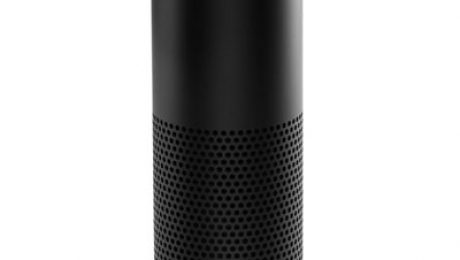
For those of you who haven’t seen the Amazon Echo in action yet, it can be quite an eye opener. We are quickly converging on an environment that was not long ago considered science fiction. The Echo can quietly sit in the corner of your room, waiting for anyone in the family to give it a command, whether it’s to play some music, check the weather or order something from (surprise surprise!) Amazon. It’s also a perfect example of technology racing ahead of the law, and unlike the ongoing controversy around email and ECPA, the stakes are much higher because of who is allegedly at risk: our children. I’ll admit that this may seem a bit melodramatic, but the Guardian US isn’t wrong when pointing out that Echo and other products like it (think Apple’s Siri and Google Now) might actually be in violation of COPPA. For those of you in the room who are not lawyers, this is the Children’s Online Privacy & Protection Act of 1998 which, among many things, prohibits the recording and storage of a child’s voice without explicit permission of their parents or legal guardian.
What this means for you:
Even though I am a parent of young child for whom COPPA was enacted to protect, it hasn’t been too hard to suppress the urge to disconnect and discard every voice-activated, internet-connected device we own (which would be quite a few, including my daughter’s precious iPad). As with many technology items that dance on the edge of privacy invasion, I weigh the convenience and value they bring against the loss of privacy and security they inherently pose. I do see the problems technology like this presents: thousands (possibly millions) of parents set down products like Echo and Siri right in front of their children precisely because using them is simple and intuitive, and in the case of Echo, they are actually designed for use by everyone in the family. However, most people probably don’t realize that today’s voice recognition technology relies on pushing recordings of voice commands to the cloud where they are cataloged and processed to improve algorithms. Not only do those recordings store our children’s voices, they are also thick with meta data like marketing preferences, “Alexa, how much does that toy cost?” and location data, “Alexa, where is the nearest ice cream shop?” I’m pretty sure none of us gave explicit permission to Apple before allowing our kids to use Siri on their iPads and iPhones. If you were to adhere to a strict interpretation of COPPA, Apple, Amazon and Google (as well as many others) have an FTC violation on their hands that could cost them as much as $16,000 per incident.
As for your Echo (or smartphone or tablet) – only you should judge whether it’s an actual risk to your child. For the moment, the law is unclear, and knowing our government, likely to remain so long after the buying public makes up its own mind.

You thought you’d done a good thing: you finally listened to all the warnings and locked your iPhone with a passcode or, if you are one of the lucky few with a shiny new 5s, the new fingerprint lock. Sadly, one of Apple’s other famed technologies may betray you in the end. An Isreali security analyst has uncovered a significant flaw in iOS7 security when access to Siri on your iPhone’s lockscreen is enabled. The problem is part convenience and part bug: using Siri while your phone is locked allows you to make calls without having to punch in a passcode, something that is indispensible while driving, or when your hands are otherwise occupied. Unfortunately, using Siri in this manner leaves a back door open in the form of unfettered access to the phone app, while your phone is still locked. Oh, and did you remember that Siri responds to anyone’s voice, not just the owners?
What this means for you:
“How bad could this be?” I hear you asking. While in the phone app, the user can access the phone’s voicemail, send text messages, view the calendar and look through all the contacts in your phone. If you don’t consider that private, you are part of a very small minority on this planet. The fix is simple: disable access to Siri from the lockscreen. The recommendation: do it now if you care about your phone’s security. It’s likely Apple will fix this flaw, but will they do it in time to protect your confidential data?

Everyone I know that uses an iPhone has told me that Siri is, at best, a fun party trick, and at worst, completely useless. If you were sold on your latest iPhone by the promises Zooey Deschanel or Martin Scorsese failed to deliver, then you may find solace in a competitive offering from Google. Voice search is now embedded in Google’s recently updated and free iOS search app, allowing you to ask natural language questions and (hopefully) receive audible answers powered by Google’s vast databases.
What this means for you:
If you are one of those people who don’t mind addressing their smartphones like they were animate objects, (you know who you are!) then this app is worth a try. Android users with the Jelly Bean operating system on their devices (Nexus users and some specific late-model Android phones) have been enjoying Google’s voice-driven search capabilities for several months, with generally favorable reviews as compared to Apple’s Siri. It’s free – all you have to lose is some time (and possibly your dignity).

CORRECTION: iOS 6 will work on iPhones from the 3GS version up. Thanks to Dave McAdams for catching that!
Apple will begin pushing the iOS6 update to its mobile device platforms on Wednesday, September 19, 2012. Along with the expected performance improvements and bug fixes, there are a handful of features that may of interest to Apple users who are not purchasing an iPhone 5.
Here are the most important changes:
- Google Maps will be replaced by Apple’s own Maps application
- Passbook is a brand new Apple app that they intend to replace paper ticketing for things like travel, movies, loyalty cards and more
- Facebook is now integrated into most of Apple’s native applications
- Siri’s search capabilities have been expanded to include things like sports scores, movie times, restaurant reservations and launching apps. It will also work on the latest iPad and the iPhone 4s, but not on older mobile devices.
- You can sync your Safari tabs between your mobile device and desktop Macs via iCloud.
- You can share photo streams with other iOS 6 users, as well as stream your photos to your Apple TV.
- Facetime can now be used on cellular networks, not just wifi.
What this mean to you:
If you are using an Apple mobile device that is NOT an iPhone 5, 4s 3GS or newer, or the 3rd generation iPad, then there’s nothing you need to worry about, as iOS 6 is not available for your device. However, if you do have a qualifying device, the upgrade will come in “over the air” if you already have iOS 5 installed. You will need to upgrade your iTunes software to version 10.7 if you plan on plugging your device into your computer. Before you upgrade, make sure you backup all of your important data (contacts, music, photos, etc.) as upgrades can go wrong, and if they do, it usually means wiping your device in order to restore it to functionality. Wiping = erasing all your personal data = disaster without a proper backup. If you rely on your phone as a critical business tool, including some 3rd-party apps, you may want to wait until you have some business downtime, just in case the upgrade goes sideways, or causes problems with your apps.