


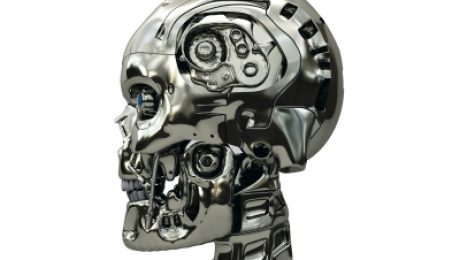
The news is aflutter with Artificial Intelligence bots doing things like writing job descriptions, college essays, passing Bar exams and apparently various other menial tasks that we humans would clearly rather have someone else doing, especially if that someone else doesn’t need to get paid, or at least paid a living wage. Both Microsoft and Google have announced their intentions to include AI in their business platforms, and while some of the things people have had AI do are pretty nifty, we also seem to be conveniently forgetting or at least disregarding the consequences of letting technology do everything.
“I’ll be back.”
Terminator is probably an extreme example of AI gone horribly awry, but we can already see faint echoes of a future where we become complacent about machines replacing humans across all aspects of our lives. Sure, it is nice that technology can assist with the dangerous, dirty and banal tasks, and for it to augment our capabilities in things where our physical bodies limits us, such as space exploration or virology or disabilities, but once it starts replacing things we should know how to do (even if not as well as a machine), we are placing a dangerous amount of trust in something that can (and will) fail. The most common manifestation of this is how most humans handle password management. We rely on technology to remember and automatically enter passwords for us on everything, including the most critical services such as email, banking apps and even the password management platform itself, and as a result, don’t remember any of them, or even realize that a password is required at all.
As a simple test of how vulnerable you might be to this over-dependency, if you imagined yourself being sat down in front of a brand-new phone or computer, would you know how to get access to something like your email, or your bank account, or even where your passwords are stored? If even imagining this scenario is triggering your fight or flight response, you might be relying on technology too blindly. There is a fine line between allowing technology to augment our capabilities as humans versus replacing basic skills that everyone should have in a rapidly evolving world. No AI spam filter in the world will beat well-trained common sense and skepticism. Using technology and our humanity together is the difference between utopia and dystopia.
Image courtesy of Geerati at FreeDigitalPhotos.net


For those of us old enough to remember the cartoon, I’m willing to bet that at least a few of us are still holding out hope for a Jetson’s future, complete with personal jetpacks, flying cars and fully automated homes. We’re getting closer on the car and jetpack thing, but it seems we have some way to go on the home automation, despite it being around in some form for decades now. Samsung’s SmartThings platform has been around for a few years now and the continuing permeation of mobile devices across all aspects of our daily lives has led to some amazingly convenient but woefully insecure home automation systems. Researchers at University of Michigan have demonstrated several security vulnerabilities in internet-connected door locks, fire alarms and lighting systems to name a few. At the moment, using the Internet of Things to upgrade your home may actually downgrade your security.
What this means for you:
Despite the technology being available for several years, most Americans have only just begun to discover a small glimmer of a Jetson-esque future. This is due to a combination of factors that include price, complexity and a (justifiable) lack of trust in remote control devices to secure their most prized (and pricey) investments. Even Silicon Valley darling Nest (now owned by Alphabet née Google) suffered multiple PR setbacks via highly-publicized bugs, failed hardware and canceled products. As such, these products and others like Samsung’s SmartThings are only just starting to realize enough critical mass in the market to capture the attention of security researchers. For now, the University of Michigan researchers are cautioning against using the SmartThings platform wherever security is a paramount concern. I don’t know about you, but as far as this homeowner and business-owner is concerned, my house and office can stay dumb for the moment. I already have problems with phones that are too smart for their own good.
Image courtesy of Stuart Miles at FreeDigitalPhotos.net

Confirming something that many of us already suspected, Twitter has revealed in its most recent SEC filing that almost 9% of all Twitter accounts aren’t used by actual humans. Given the social media’s 271 million accounts, that’s nearly 23 million Tweeters posting content at the behest of some form of automation or algorithm.