


In a House Intelligence committee report released on Monday, Oct 8, 2012, US lawmakers cite security concerns with Chinese electronics manufacturing firms Huawei and ZTE. Though neither could be considered a brand recognizable in the US, both firms manufacture electronics that are used to power telecommunication devices all over the world. Though no overt wrongdoing was detected in the 9-month investigation, the report notes that the firms refused to fully cooperate with the investigation. The Chinese government is known to have a heavy hand in directing operations and even strategy for Chinese businesses, mostly to ensure tight control over national security, so it’s no wonder investigators may have encountered resistance from the companies.
What this means for you:
Independent, industry-led investigations have not found any evidence that equipment utilizing parts manufactured by either company have purposefully included security defects or “backdoors” that may have been mandated by the Chinese government as a possible means to infiltrate other countries’ data networks, though vulnerabilities have been found in older Huawei routers. Similar defects have been found in Cisco routers (an American company) which lends credence that the vulnerabilities were not state-sponsored “backdoors”, but instead a product of ongoing security research and development. The intelligence report seems to be more politically minded as opposed to highlighting a clear and present danger, focusing on “what-if” scenarios given China’s heavy-handed government, and fails to note that Chinese (or any other nationality) hackers don’t need an easy-to-detect backdoor to hack American business interests.
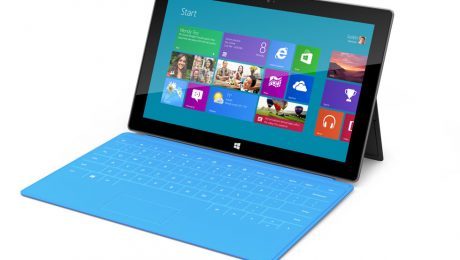
Microsoft has confirmed the arrival of its new tablet, dubbed “Surface” via press-only invitations to a launch event happening on October 25. Following the conclusion of the event, the tablets will actually be available for sale at Midnight PST via Microsoft’s website as well as the actual brick and mortar retail stores – 27 locations in the US as of this writing. The new tablet will be running Microsoft’s new operating system, Windows 8, and will come with a keyboard integrated into the built-in cover. Pricing is still not definite, but most analysts think the tablets will range in price from $500-800, making them slightly pricier than the current tablet champ, the Apple iPad.
What this means for you:
If you’ve been waiting for a “Windows” tablet with bated breath because your business is firmly entrenched in the Microsoft camp, or your IT department is slow to incorporate the beloved iPad into their technology implementations, I wouldn’t hold your breath that the arrival of Surface will change that timetable in the immediate future. Windows 8 is still very much untested in the corporate IT space, and the business world at large will be predictably slow in adopting it, as most businesses are only just starting to adopt Windows 7. Tablets, like laptops before them, represent a difficult challenge to most IT departments in terms of managing both the hardware as well as the data on them because of their highly mobile form-factor.
The arrival of a “Windows” tablet may allow for a more corporate style of tablet usage, with the underlying expectation that because the tablet is based around Microsoft technology, that it will be easier to manage from a corporate perspective and able to leverage existing investments in MS platforms. If you are the adventurous type and don’t already own an iPad or Android-based tablet, the Surface may be worth investigating, but don’t expect a robust app choice until (and if) the device can carve a niche into the existing tablet marketplace.

A new variant of the Dorkbot Worm that plagued Facebook users in late 2011 has resurfaced via emails sent to Skype users with the message reading “Lol is this your new profile pic?” The email also has a zipped attachment that contains an executable titled “skype_[today’s date]_image.exe” hoping to fool careless Skype users into thinking that the attached file is an update to their Skype software, or more foolishly somehow the above referenced profile picture. Instead, it “zombifies” the computer and, in a new twist, also installs a “Ransom-ware” form of malware which encrypts the user’s data and threatens to delete it unless a payment of $200 is made within 24-48 hours.
What this means for you:
Even if you are running the most recent and most powerful anti-virus and anti-malware software on your machine, it’s still possible for your computer to become compromised merely because you “opened the door” by purposefully running the unindentified executable. There is nothing that can prevent your computer being compromised in these types of situations except constant vigilance. Here’s what you should be watching for:
- Do you even know the sender? Do they normally email you out of the blue with an attachment? Obviously, attachments from strangers is a huge red flag!
- Is the email you’ve received characteristic of the sender? Does it have unusual spellings (or misspellings), capitalization, punctuation? Is the subject matter something you would normally discuss via email?
- Is the attachment something you were expecting, or at minimum, something you recognize? Is it normal for the sender to be sending you a file in this manner?
- If the email includes links, do the links actually go to where they say they do? For example, look at this link I made to google.com (which actually goes to bing.com). See how easy it is to fake a URL? Use your email program’s “View Source” option to check suspicious links.
- If you want to be certain, contact the sender via another means – phone, SMS, in-person – (their email account may be compromised) to verify they actually sent you a safe attachment.
Image courtesy of Victor Habbick / FreeDigitalPhotos.net

Several prominent multinational banks suffered website and online banking service disruptions over the previous two weeks as the result of focused and highly sophisticated cyber attacks. Apparently led by Middle-Eastern “Hackivists” groups in response to the “Innocence of Muslims” YouTube video controversy, researchers have indicated that unlike attacks seen in previous years, this series of attacks were well planned, highly organized and of sufficient force to have even taken down hardened and secure telecom companies who are well-versed in handling the Denial of Service attacks that are typically experienced. In these most recent attacks, the hacktivists used zombified user PC’s as well as thousands of compromised webservers to shut down bank websites for hours, and sometimes days at a time.
What this means for you:
Zombified PC’s are no good to their handlers if they are detected and sanitized before they can be “rented” out, and as such, the most effective malware infection is often one that exists quietly on your technology until it is called into service. Obviously, this could result in your computers or servers, previously well-behaved and performing normally, suddenly acting up and running slowly, usually at the most inconvenient time for you and your business. Always make sure your anti-malware software is installed, updated and working properly.
Keep in mind that it’s even possible for website engines to become compromised and used as a zombie. Unless you tend to your site regularly, it’s possible for it to become compromised without you even noticing – that is until a customer visits your website, notices something wrong, and takes the time to report it to you instead of moving on to something else. Not sure if your computers or servers are secure? Give C2 a call and let us put your mind (and business) at ease!
Image courtesy of Stuart Miles / FreeDigitalPhotos.net
![128px-Apple-logo[1].png](https://c2techs.net/wp-content/uploads/2012/10/128px-Apple-logo[1]-460x260_c.png "128px-Apple-logo[1].png")
Since its release last month, Apple has been fielding numerous complaints about wifi issues on the new iPhone 5. It’s not uncommon for manufacturers to sit tight during the first wave of complaints to see if there is any merit to them, or if they are just a combination of user-error and settling-in that always appears in new product launches. New customers were complaining of poor performance during the initial weeks of the iPhone 5’s arrival, and now that the first month’s bills are rolling in, these same customers have uncovered what looks to be a serious bug on the Verizon version of the the iPhone 5: instead of using an existing wifi connection to deliver data to the phone, iOS 6 (the operating system powering the iPhone 5) will instead continue to use the cellular connection, chewing up the monthly data allotment at an alarming rate.
Apple admitted the existence of the bug through a software update released on September 30, and Verizon has stated that no one will be charged for “unwarranted data usage” that might have occurred from this bug.
What this means for you:
If you’ve recently purchased an iPhone 5 or have upgraded your older iPhone 4 to iOS 6, and Verizon is your carrier, keep a close eye on your data usage and look for any unusual spikes in your monthly usage average. Reports are mixed as to whether this problem affects any other model other than the iPhone 5. Watch for the alert to patch your phone, and accept the update as soon as you see it. To check your cellular data usage on your iPhone: Settings->General->Usage->Cellular Usage.

The state of California just signed into law a ban on employers and universities requiring employees and applicants grant them access to their social media accounts (e.g. Facebook or Twitter). As surprising as this may seem, this was actually a thing for awhile. That is, until the internet started a ferocious publicity storm and names were named. Even still, the practice has been common enough to galvanize California lawmakers to take matters into their own hands and pass a law that in effect orders companies and universities to stop being so creepy.
What this means for you:
As of January 1, 2013, it will be illegal for you to ask your employees or applicants for access to their personal social media accounts, which will include things like Facebook, Twitter, MySpace, etc. Keep in mind, many people already openly share many aspects of their personal life (sometimes unintentionally!). As an applicant, even before it becomes an actual law, don’t let an institution or organization bully/intimidate you into this degrading invasion of your privacy.
As a business owner, employer or educator, this area is still very grey, and proper legislation is far from being clearly defined, especially as the boundaries between employees’ professional and personal lives are blurred by increasingly permissive/flexible business cultures. Remember the days when Facebook was banned at the office? Aside from the fears about wasted productivity, there were (and still are) very valid underlying concerns of mixing personal (and possibly very unprofessional) activities with business/educational pursuits. If in doubt, ask your HR representative, and check your conscience.

Threatpost has reported on a new zero-day vulnerability that is affecting the Oracle Java plugin used in all popular web browsers, and this time, all operating systems, including Apple’s OS X which is typically excluded from most security exploits. So far, the white hats are ahead of the game on this one, having detected and then demonstrated the hack to Oracle in a “proof of concept” as opposed to discovering malware in the wild exploiting the security hole. In case you missed it, Oracle experienced a similar situation not less than a month ago with Java 7, so it’s likely there are more holes waiting to be discovered.
What this means for you:
This is a fairly significant vulnerability according to the folks that discovered it, as it affects multiple version of Java, including the most recent version 7 release, and multiple operating systems. However, it does not appear to be widely exploited yet, giving Oracle time to patch it up before malware writers can disperse malware to take advantage of this hole. According to Oracle, Java is in use on billions of devices, so if they were to ignore this vulnerability, there could be serious repercussions. If Oracle drags its feet on releasing a patch, you may want to consider disabling the Java plugin in your browser, or uninstalling it altogether. Before you do that, make sure you don’t rely on Java for any critical business applications – you may be surprised to find out just how often you use Java without knowing it!
![Internet_Explorer_7_Logo[1].png](https://c2techs.net/wp-content/uploads/2012/09/Internet_Explorer_7_Logo[1]_0-460x260_c.png "Internet_Explorer_7_Logo[1].png")
In a rare, out-of-band release, Microsoft released an update on Sept 21 that patched the much bally-hooed vulnerability that affected all versions of its browser as far back as IE 6. This security flaw was significant enough to warrant the German government recommend to its citizens that they use another browser until MS could address the exploit, which it did on the 19th in a “fixit” tool downloadable via their website, and now in an MS Update that will be delivered automatically to all validated Windows OS systems.
What this means for you:
Microsoft normally releases its updates on Tuesday, so the more savvy among you might have already noticed the unusual appearance of an update request from your Windows machine as early as last Friday evening. Regardless of when you see it, you should allow update to download and patch your OS as soon as possible, especially if you use IE as your internet browser. If your computer is managed by a corporate IT department, the update may go through internal testing before being released to update your computer. Assuming you’ve not made any changes to how your OS stays up to date, you should be patched, or will be patched the next time you reboot your computer. To make sure you’ve received this update, you can visit your Control Panel, open Windows Update and check your update history for “Cumulative Security Update for Internet Explorer (2744842)”. If this has been successfully installed, you been patched!

Either stop what you are doing and read this article from PC World, or mark it for later and keep reading this story, because this may be the most important thing you do this month.
Easily searchable personal information available on the web plus easy-to-guess passwords can lead to identity theft. Not worried about that? You should be. It’s a problem that won’t be going away anytime soon, and it won’t just affect your personal life – it can impact your business as well. Keep in mind that being targeted by a hacker versus getting infected by malware are two very different levels of danger. A direct hacking attempt is focused and presents a very clear threat to you, your loved ones and your business.
What this means for you:
Google yourself. Try various combinations of your name (including former names if appropriate). Now try your family members. Look for data that you might consider sensitive: age, birthdate, address, names of financial institutions, work or home addresses, and most importantly look for anything that you’ve used as a password. Don’t freak out! Google doesn’t know you that your dog’s name is your favorite password, but a clever hacker might figure it out just by guessing.
If you’ve sufficiently worried yourself, here’s what you need to do to harden your personal security profile:
- Use longer passwords (8 or more characters) that are not easily guessable. That means you need to stop using your Mom’s birthday, your cat’s name, etc. Mix it up with numbers and punctuation. Hackers can crack a 5-digit/letter password in a single hour just by brute force. If you want to be really safe, use a Passphrase.
- Don’t use the same password/passphrase on your important accounts, like Banks, email, data encryption, etc.
- Search your email (especially if it’s cloud-based like Gmail or Hotmail) for any emails that contain passwords, delete those emails immediately. Delete any emails that list account/login names for important accounts. Do this even if the information is no longer valid – hackers can use the info to make better guesses about active account names and passwords.
- Check your privacy settings for any social networking accounts you use (or have used in the past). If you don’t understand how they work, learn how they work or remove your account if you can’t/won’t take the time. This includes Facebook, G Plus, Pinterest, Yelp, etc. Anywhere you’ve typed in personal information about yourself may be a potential leak you didn’t know you needed to plug.
In the end, if you are able to make yourself even incrementally harder to hack than someone else, hackers are more likely to move on to easier targets. Obviously, if you need help hardening your personal or business security profile, don’t hesitate to give us a call!
Image: FreeDigitalPhotos.net
![maps_gallery_1[1].jpg](https://c2techs.net/wp-content/uploads/2012/09/maps_gallery_1[1]-460x260_c.jpg "maps_gallery_1[1].jpg")
It would seem that Apple’s new Maps application introduced with iOS 6 on Sept 19 has had a bit of a rough start. As one might expect, the technology media rakes in the clicks with glee when the industry’s golden child stumbles, and reports are already coming in of the new app’s misguided attempts at navigation. Gizmodo’s Kyle Wagner reminds Apple fans that comparing the new app to the reigning heavyweight champ, Google Maps, is perhaps not the fair, given Google has had years to amass and refine the billions of points of data that are required to present an accurrate picture of our world.
Given this, critics still rightly point out that Apple’s open feud with Google in other areas (namely Android vs. iPhone and Siri vs. Google Now) has amounted to Apple taking out its frustration on its customers by replacing the highly functional Google Maps with it’s own, still very beta, version of Maps.
What this means to you:
If you rely heavily on your iPhone for navigation, you can continue using Google Maps as a native app as long as you don’t upgrade to iOS 6. If you’ve bought an iPhone 5, you can use Google Maps through the phone’s browser, though it’s definitely a lot less elegant and usable in this fashion. It may be many months, if not years, before Apple’s Map app can match Google turn for turn, and let’s face it, Google isn’t standing still at this point. It’s unclear whether Google will create an app store version of it’s Maps application for future download on the iPhone, and even less clear whether it will even make it through Apple’s strict and sometimes arbitrary approval process.