



Get ready for 1000% of your daily dose of Irony: America’s top surveillance outfit, the National Security Agency appears to have been hacked, according to announcements made by a group known as the “Shadow Brokers” and backed by a sample of data released as proof. Not only that, it may have happened as early as 2013, just days after NSA whistleblower Snowden went public. The spy agency has yet to comment on the matter, though given their usual taciturn stance on sharing information with the public, further enlightenment is unlikely to come from that source. Snowden himself weighed in on the issue shortly after this news became public, attributing the original hack as likely being the Russian government. In a further dose of irony, Snowden currently resides in Russia, presumably as part American exile and part Russian political trophy.
What this means for you:
Before you grab your bug-out bag and head for your internet-proof bunker, make sure you freak out for the right reasons. In this particular instance, the data for sale appears to be code, and not data on Americans (which they are assuredly collecting). Offered as proof of the deed, the Shadow Brokers posted source code of known malware apps the NSA is alleged (by Snowden and others) to have used to break firewalls and other security platforms in use by foreign nations, presumably to allow the install of other covert surveillance software on the computers behind those security measures. Security pundits, including industry vet Bruce Scheier, have evaluated the data released, and in light of the the current political climate between the US and Russia, are of the opinion that this might be a manuever by the Russian government in anticipation of criticism or accusations from the US about the DNC hacks. To put it in more understandable terms, we may be seeing the opening salvos in a new, thoroughly modern Cold War. Instead of warheads and undercover spies as pawns, this one may be waged via the internet through cyber warfare and social media. Ready to head to that bunker yet?

Researchers from security firm Check Point announced at this year’s DefCon security conference that up to 900 million smartphones may be vulnerable to a set of up to 4 vulnerabilities that appear in Qualcomm-powered devices. Discovered earlier this year and reported to the manufacturer, Qualcomm has since published fixes, but not all manufacturers have pushed these fixes to all the affected models, including Google’s own Nexus line which normally has a reputation for being kept more current than most Android devices.
What this means for you:
Based upon the affected Qualcomm chipset impacted by these four vulnerabilities, the following models are impacted:
- BlackBerry Priv
- Blackphone 1 and Blackphone 2
- Google Nexus 5X, Nexus 6 and Nexus 6P
- HTC One, HTC M9 and HTC 10
- LG G4, LG G5, and LG V10
- New Moto X by Motorola
- OnePlus One, OnePlus 2 and OnePlus 3
- Samsung Galaxy S7 and Samsung S7 Edge
- Sony Xperia Z Ultra
To find out if your phone is affected by the vulnerabilities, you can run this app on the Google Play Store: QuadRooter Scanner. Buyer beware: the app developer is very transparently marketing its mobile protection app through the publicity surrounding their discovery. I don’t begrudge them the opportunity – after all they did the hard work to discover these flaws, but I didn’t install their software as I am confident I can keep my device safe, and I’m sceptical of mobile security apps in general. If the app reports that you are vulnerable, it will state which CVE’s are still unpatched on your device. You have a few options at this point:
- Check to see if any outstanding OS updates are available to be installed on your device. Where this is shown will vary depending on your phone’s manufacturer, but typically it will be found in “Settings”
- Avoid “side-loading” apps from dodgy sources. Only install apps from the Google Play store and nowhere else. Even then, think twice and read the reviews on any new apps, especially ones that seem to be very new – hackers have been known to sneak malicious apps onto the Play Store for a short while before being detected and removed.
- As usual, avoid opening strange emails, URLs and attachments on your device.
- Send an email to your device manufacturer asking them when they plan to patch the vulnerabilities on your phone. The more people that write in, the more likely the manufacturer will move faster on deploying the fixes.

Just when you think Microsoft might have its act together security-wise, some clever/persistent security researcher will do their damndest to shatter your fledgling comfort with the latest exotic bug. In this case, the bug has been around since 1997 – it’s so old it’s officially Bug #4 in Internet Explorer. As in the fourth bug discovered in Internet Explorer, ever. And never fixed! Sadly, this negligence has arisen as a critical security flaw in both Windows 8 and 10, and could lead to your Microsoft Live account being exposed.
What this means for you:
This flaw does not affect the following:
- Windows 7,
- Windows 8 or 10 computers attached to a domain,
- Windows 8 or 10 computers accessed via local accounts,
- Windows 8/10 users who do not use Internet Explorer, Edge or any version of MS Outlook.
The people who fall into #2-4 are what I would call a “select” demographic, which is to say that it’s more likely you are using Windows 8 or 10 with a Live account. Via trivial exploit, a hacker could obtain your login and a hashed version of your password, and depending on how complex that password is, that hash could be cracked in less than a minute, meaning your Live account is now fully compromised. In case you weren’t sure what Live accounts can do, they give you a wide variety of access to Microsoft services including OneDrive, Skype, MS Office, and XBox Live to name a few, not to mention your actual computer, should the hacker somehow gain access to your local network or the device itself.
Before you start panicking, there is a (relatively) simple solution: change your password and switch your Live account to use 2-factor authentication. This won’t change how you log into your computer, but it will force anyone trying to use your credentials elsewhere online from using them without that second authorization that 2-factor provides, even if they manage to steal your password again. To really circumvent this bug from impacting you, switch to using a local account on your computer, or to stop using IE/Edge and Outlook until Microsoft fixes this ancient, but dangerous bug.
Image courtesy of Stuart Miles at FreeDigitalPhotos.net

It wasn’t enough that one tech giant was making hot headlines because their products were literally a fire hazard, now computer manufacturer Lenovo is feeling the burn due to a recently disclosed vulnerability that could have a widespread impact on many of their computers. Dubbed “ThinkPwn” by its discoverer as a play on the popular Lenovo ThinkPad model, this particular weakness seems to impact the entire ThinkPad line going back several years as it’s a flaw embedded in the firmware of the chipset used in dozens of computer models, including, unfortunately, HP and motherboards made by component manufacturer Gigabyte, which are extremely popular amongst build-your-own PC enthusiasts. The ThinkPwn weakness appears within low-level code that provides core security infrastructure to the operating system that runs on top of it. If Microsoft Windows was your house, this code is a big crack in your foundation.
What this means for you:
Neither Lenovo or HP have disclosed which models are affected, but it seems widespread enough that Lenovo has issued an “industry-wide” warning. Presumably all affected manufacturers are working on security fixes, but none are available yet, so if you own an HP or Lenovo (or Gigabyte-powered PC), sit tight, make sure your antivirus is up to date, and remain vigilant.
How did this vulnerability come to impact so many computers? The hardware-layer code that powers the machine-OS interface (BIOS on older machines, UEFI on newer computers) is also written and updated by a small number of companies called Independent BIOS Vendors or IBVs, all of whom use a base set of code from chipset manufacturers like Intel and AMD. Like so many other widespread weakness, the proliferation of the flaw comes from everyone in the industry relying on a core set of code. Thank you, Mass Production!

Though it’s been reported as being on death’s door for well over a year, Adobe Flash is still in wide use on the internet. Just as stubbornly, security problems continue to plague its undying existence, and the latest is already being exploited by an advanced persistent threat group dubbed StarCruft by security firm Kaspersky. Details are sketchy at the moment – Adobe isn’t publicizing any details on the loophole, and it won’t be patched until June 16 at the earliest.
What this means for you:
According to Kaspersky, the exploit is definitely being used to attack what they call “high value” targets – primarily large companies or organizations with data that would be prized either for criminal or political value, but that doesn’t mean anyone can rest easy. The patch from Adobe will most likely solve this particular vulnerability, but you can count on other exploits being discovered, as they always have in the past, and, as always, the fix is entirely dependent on people actually updating their software on a regular basis. Until you can confirm Flash has been patched on your workstation, avoid clicking strange links (as always), and make sure you have updated malware protection in place.
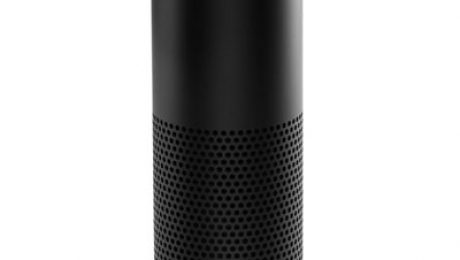
For those of you who haven’t seen the Amazon Echo in action yet, it can be quite an eye opener. We are quickly converging on an environment that was not long ago considered science fiction. The Echo can quietly sit in the corner of your room, waiting for anyone in the family to give it a command, whether it’s to play some music, check the weather or order something from (surprise surprise!) Amazon. It’s also a perfect example of technology racing ahead of the law, and unlike the ongoing controversy around email and ECPA, the stakes are much higher because of who is allegedly at risk: our children. I’ll admit that this may seem a bit melodramatic, but the Guardian US isn’t wrong when pointing out that Echo and other products like it (think Apple’s Siri and Google Now) might actually be in violation of COPPA. For those of you in the room who are not lawyers, this is the Children’s Online Privacy & Protection Act of 1998 which, among many things, prohibits the recording and storage of a child’s voice without explicit permission of their parents or legal guardian.
What this means for you:
Even though I am a parent of young child for whom COPPA was enacted to protect, it hasn’t been too hard to suppress the urge to disconnect and discard every voice-activated, internet-connected device we own (which would be quite a few, including my daughter’s precious iPad). As with many technology items that dance on the edge of privacy invasion, I weigh the convenience and value they bring against the loss of privacy and security they inherently pose. I do see the problems technology like this presents: thousands (possibly millions) of parents set down products like Echo and Siri right in front of their children precisely because using them is simple and intuitive, and in the case of Echo, they are actually designed for use by everyone in the family. However, most people probably don’t realize that today’s voice recognition technology relies on pushing recordings of voice commands to the cloud where they are cataloged and processed to improve algorithms. Not only do those recordings store our children’s voices, they are also thick with meta data like marketing preferences, “Alexa, how much does that toy cost?” and location data, “Alexa, where is the nearest ice cream shop?” I’m pretty sure none of us gave explicit permission to Apple before allowing our kids to use Siri on their iPads and iPhones. If you were to adhere to a strict interpretation of COPPA, Apple, Amazon and Google (as well as many others) have an FTC violation on their hands that could cost them as much as $16,000 per incident.
As for your Echo (or smartphone or tablet) – only you should judge whether it’s an actual risk to your child. For the moment, the law is unclear, and knowing our government, likely to remain so long after the buying public makes up its own mind.

In what appears to be a record breaking breach, the information exposed when MySpace was hacked in 2013 has finally been publicly documented by website LeakedSource as containing nearly half a billion passwords for 360 million accounts, dwarfing previous breaches like the US Voter Database Breach (190M), Ebay (145M) and Global Payments (130M). What makes this breach particularly egregious is the fact that MySpace was storing this data with very weak encryption (SHA1) and no “salting” (an encryption technique to add complexity and randomness to each stored password), resulting in a massive password source for hackers and identity thieves.
What this means for you:
Numerically speaking, the odds are at least one of your passwords (present or past) has been compromised and is likely to be found in either LeakedSource’s or Have I Been Pwned’s databases, both of whom offer a simple lookup tool to check to see if your password or passwords have been exposed in any of the numerous breaches that have occurred over the past few years. Depending on how diligent you have been in keeping unique passwords or at least changing them, if a search turns up positive on either site, and you are still using that same password or a similar one with minor changes, you should go out and change it immediately. Additionally, if it’s available, you should be using 2-factor authentication to secure any important online accounts, especially email. Lastly, stop using the same password everywhere. It’s only a matter of time before that will come back to haunt you!
Image courtesy of David Castillo Dominici at FreeDigitalPhotos.net

In an extremely unusual occurrence, the operators/handlers of the infamous TeslaCrypt ransomware have announced they are discontinuing operations of their highly lucrative malware campaign for undisclosed reasons. Analysts speculate it could be anything from growing law enforcement attention, redirection of resources on even more virulent malware, to the unlikely scenario that the operators have made enough money and are feeling generous. Whatever the case may be, researchers from security company ESET contacted the “retiring” operators and asked them if they would publish TeslaCrypt’s master key, and to everyone’s astonishment, they obliged. Armed with this critical piece of data, ESET and others have built apps that have the capability of decrypting data that is being held captive by any number of TeslaCrypt variants dating back as far as early 2015.
What this means for you:
For one of my clients, a distant hope for this exact scenario finally paid off. Their data has been trapped in encryption for over a year, and as they didn’t have a viable backup at the time of the infection, they walked away from nearly a decade of data that was locked away even after paying the ransom. After our initial attempts to recover the data with what seemed to be a fake key, we put the data aside in the hopes that the master key would someday be recovered, possibly through law enforcement activities. Fast forward to this past weekend: after several hours of number crunching with tools provided by the brilliant folks at BleepingComputer.com and the master key secured by ESET, I was able to successfully decrypt nearly 200,000 files in what appears to be a full recovery of the “kidnapped” data.
If you happen to be among the unfortunate few who fall into this same ransomed data, backup-bereft category, your long-odds gamble may actually pay off like it did for my client. Counting on events like this unfolding for other variants of malware is still highly irrational. Last time I checked, there were still large portions of the world beset by malicious and criminal behavior, and it may never be revealed why the TeslaCrypt operators released the master key. Even if some hackers discovered compassion for their fellow humans and gave up their black-hat ways, there are ten others ready to take their place. Cybercrime continues to be a huge moneymaker for the criminal element. For this reason alone, you should continue to reinforce your technology defenses with a strong firewall, competent anti-malware and reliable offsite backups.
Image courtesy of renjith krishnanat FreeDigitalPhotos.net

In case you are new here, let me catch you up on the primary purpose of this blog. My objective is to scare you into being more secure with technology. It doesn’t always work – one person’s phobia is another’s fetish, but this one ought to give you pause. A white hat security hacker has uncovered a bug in Symantec Antivirus that would allow for an almost trivial exploitation of its scanning engine to actually compromise the computer its supposed to be protecting. And this bug exists across all three major operating systems – Windows, OSX and Linux – something that is very rare in any type of software. Not worried yet? A victim doesn’t even need to open an infected file because Symantec will do it for them when it scans the file in your email, or scans a link in your web browser. Just touching a file designed to exploit this bug will cause a memory buffer overflow, which is tech-speak for “OK malware, I’m puckering up so you can plant a big haymaker right in my kisser.”
What this means for you:
If you don’t use Symantec or Norton products for malware protection, carry on and enjoy that feeling of schadenfreude most technology users rarely experience. If you do use either of those products, Symantec has already patched this bug, and if your software is set to update automatically, it should no longer be a problem. There in lies the rub: do you know if your antivirus is up to date? How many of you have been ignoring the little warning flags your AV has been waving at you from the corner of your screen, “Hey, I need to update but I can’t for some reason!” Do you know how to make sure your antivirus is updating regularly? By the way, “regularly” means daily, if not multiple times a day. Zero-day exploits are sometimes seen within hours of an vulnerability being published. Security companies like Symantec stake their reputation on reacting quickly, but they can only lead your computer to the update river. You need to make sure it’s drinking deep, daily. Not a software update wrangler by trade? Well it just so happens I know someone who is, pardner.
You wouldn’t let your business be run by amateurs, why would you leave your technology to anyone less that an experienced professional?

For those of us old enough to remember the cartoon, I’m willing to bet that at least a few of us are still holding out hope for a Jetson’s future, complete with personal jetpacks, flying cars and fully automated homes. We’re getting closer on the car and jetpack thing, but it seems we have some way to go on the home automation, despite it being around in some form for decades now. Samsung’s SmartThings platform has been around for a few years now and the continuing permeation of mobile devices across all aspects of our daily lives has led to some amazingly convenient but woefully insecure home automation systems. Researchers at University of Michigan have demonstrated several security vulnerabilities in internet-connected door locks, fire alarms and lighting systems to name a few. At the moment, using the Internet of Things to upgrade your home may actually downgrade your security.
What this means for you:
Despite the technology being available for several years, most Americans have only just begun to discover a small glimmer of a Jetson-esque future. This is due to a combination of factors that include price, complexity and a (justifiable) lack of trust in remote control devices to secure their most prized (and pricey) investments. Even Silicon Valley darling Nest (now owned by Alphabet née Google) suffered multiple PR setbacks via highly-publicized bugs, failed hardware and canceled products. As such, these products and others like Samsung’s SmartThings are only just starting to realize enough critical mass in the market to capture the attention of security researchers. For now, the University of Michigan researchers are cautioning against using the SmartThings platform wherever security is a paramount concern. I don’t know about you, but as far as this homeowner and business-owner is concerned, my house and office can stay dumb for the moment. I already have problems with phones that are too smart for their own good.
Image courtesy of Stuart Miles at FreeDigitalPhotos.net