


Back when I first heard about Facebook I was working for a private university known for its “dry” campus. I was asked to consult on the case of a student who was being disciplined for violating the no-alcohol policy because a picture had been discovered of them buying booze at a nearby supermarket. It had been uploaded by the student’s friend to a hot new website called Facebook. I distinctly remember discussing this with staff and faculty at the time, predicting, “This is going to get a lot of kids in trouble.” There was discussion of banning access to the site, but filtering internet content back then wasn’t as straightforward as it is now, and the discussion was tabled with a promise to review the issue at a later time. Fast-forward to the present, where Facebook is still getting a lot of people in trouble, and themselves as well.
From the frying pan, to the fire, to…incinerator?
It might be hard to believe, but it was only June when we had to air out the latest load of dirty laundry from Facebook. Prior to that, they have been blog subjects seven times this year alone, and none of them were for something good! I’d say this month’s two-fer entry might be their pièce de résistance of colossal cock-ups, but there are still 90 days left in the year, and Facebook seems bent on setting some sort of record for destroying themselves.
First, they were caught red-handed letting advertisers use phone numbers provided by users for authentication purposes, something they had previously denied. To add insult to injury, it’s also come to light that they will also target individuals through contact information uploaded by their friends through the Facebook app, even if the individual never provided any sort of consent for such use.
If that isn’t enough to get your blood boiling, how about 50M Facebook users having their accounts compromised? Rather than the old-fashioned password hack, attackers exploited a bug in Facebook’s “View as” feature which allowed them to essentially steal the authentication token used to provide continued access after you’ve initially logged in. Think of this token as a VIP wristband you might wear at an event that also gets you access to the backstage. This token not only provides you a quick login to Facebook but to dozens of other connected services, such as Instagram and WhatsApp, that allow users to authenticate through Facebook instead of creating a unique login and password. Just like the wristband, Facebook only looks at the token and not the person using it, to determine what they are allowed to access, so you might get an inkling of why it being stolen is kind of a bad thing. The investigation is still ongoing, but according to Facebook, no passwords or credit cards were stolen, and it doesn’t look like the perpetrators of the September breach used their “wristbands” get into the various third-party platforms it could have granted access to, but I’d put even money on Facebook having yet another, “Wait, hold my beer,” moment, so don’t put the pitchforks too far out of reach.
Unfortunately for the two billion humans who are still trying to get some sort enjoyment (or livelihood) out of Facebook, there really isn’t any platform that comes close to being able to replace it. Your choices are “deal with it” or go cold turkey, the latter of which I don’t see any of my Facebook-hooked friends doing any time soon. If you’ve tied your various other online services to Facebook’s login in the pursuit of convenience, it only makes giving up Facebook that much harder and further illustrates just how dangerous this type of practice can be – Facebook login gave everyone a shovel, and quite a few people dug a hole that they have no idea how to get out of. Sadly, not climbing out of that hole and permanently putting the shovel aside essentially rewards Facebook for their negligent security practices, something that we should not do if we ever want the service to be something more than a way for advertisers and hackers (and Facebook!) to exploit for their own profit.

For the most part, everyone that I speak with has come to accept the possibility that the Internet knows much more about them than they might think. Their acceptance (which ranges from grudging to incredibly blasé) of a faceless, amorphous entity known as “the Internet” being more familiar with them than their neighbors is made acceptable exactly because the Internet has achieved that same omniscient and omnipresent position as “the Government” or “the CIA” or, dare we say, God him/her/itself. These entities are out there, both comforting and ominous, but not personal, not sitting right next to you.
Perhaps we’ve been doing this wrong.
People aren’t scared, upset or even bothered anymore when we tell them their privacy has been invaded by the “Internet”. In truth, that’s a kindness, because the specifics are much more disturbing. A security researcher just uncovered a veritable treasure trove of personal information on nearly 340 million Americans, i.e., all of us. This information was being hosted in an unsecured database by marketing firm Exactis, and it holds close to 2 terabytes of data. And unfortunately for all of us, it’s much worse than credit cards and social security numbers. Instead, it’s much more personal, such as home addresses and phone numbers, number of children in the family, interests, hobbies, habits, shopping preferences, up to 400 variables on each person in their database, including whether they are a smoker, how many pets and what type, and yes, religious affiliation.
If you ever question how online advertising could be so specific, wonder no more. The marketing firms know where their bread is buttered, and firms like Cambridge Analytica and Exactis are sacrificing your privacy on the altar of data aggregation for the almighty dollar. How does one fight back? Make sure you understand where your local congress critter stands on matters like privacy, encryption and regulatory enforcement on failures like the massive Equifax breach for which exactly zero justice or compensation was delivered.
Get out and vote.

A lot of my friends and colleagues are always surprised that I don’t have more gadgets around my house, especially items like Amazon’s Alexa or Google Home, seeing as I am a long-time customer of both mega-companies and utilize many of their services on a daily basis. Those of you who have been paying attention know that I’m pretty keen on privacy, and have also seen me write on the topic time and time again, mostly because companies like the aforementioned sometimes have trouble respecting our right to privacy. It’s not that I have something to hide, it’s that I am very specific about what I want to share, and that does not include sharing private family conversations with a work acquaintance, which seems to be what happened to a Seattle couple via their Amazon Echo device.
Entre nous becomes menage a trois
What many fail to truly understand is that in order for any voice-activated device to work, it must always be listening to everyone nearby, waiting for its moment to shine. In the case of the incident mentioned above, the Echo device thought it heard its vocal trigger, “Alexa” (or something phonetically similar) woke up, heard another trigger, “Send a message,” which caused to start recording what it thought was a legitimate message, which it then dutifully sent on to the unintended recipient. The couple had no idea their conversation was recorded and were only clued in when the unintentional eavesdropper called them to warn them about the incident.
How many times has your phone (iPhone or Android) self-activated because it thought it heard its vocal cue? Mine does this about 2-3 times a month, mainly because it hears (or thinks it hears) me saying “OK” and “Google” all the time, when in fact, I’m just having a conversation with someone nearby. It’s even self-activated because of audio from a podcast or song, which is really weird and creepy sometimes. Hackers have demonstrated the ability to completely compromise late model devices, and it’s a known intelligence exploit to compromise surveillance subject phones explicitly for the purposes of turning on the microphone as the ultimate audio bug. We carry these devices everywhere, and now they are in our most private spaces. It’s just you and me, and the internet now.

What scant regulation we have as a country that protects our personal privacy is mostly built around the concept of “Personally Identifiable Information” which, according to Wikipedia is, “…information that can be used on its own or with other information to identify, contact, or locate a single person, or to identify an individual in context.” If you think of PII at all (most of don’t as a rule, which is part of the problem) you may enumerate bits like date of birth, social security number, mother’s maiden name, street address, phone number, etc. While those definitely qualify as PII, there is a ton of other information that falls into this category that the average person wouldn’t necessarily consider sensitive, such as a Twitter or Instagram account name, that without context, seems harmless. Thanks to the internet and data aggregation, everything can be connected, and now that pretty much all of our information is stored digitally, more readily stolen. A recent breach of DNA-testing firm MyHeritage put us one step closer to a dystopian future where the security and privacy of our own genetics will be at risk.
What this means for you
Fortunately for its 92 million customers, their DNA information wasn’t stolen, just encrypted emails and passwords. One could ask what sort of world we are living in that this constitutes (relatively) good news, but in the face of the massive Equifax debacle with zero consequences for any of the culpable, it seems that having your account and password stolen from yet another online service provider is now counting as the new normal. As horrifying as that is to consider, consider the nightmare scenario where not only are your DNA test results available somewhere on the internet, an insurance or mortgage company has bought this info and is using it in their underwriting process to evaluate your qualifications. It doesn’t matter that the information was originally acquired illegally or without your consent, there are no laws or regulations currently on the books that govern the use of genetic data, and judging from recent legislation coming out of Congress there is currently little interest in protecting the average citizen from anything, let alone an issue over which most Congress critters have an incomplete grasp. What’s to be done? Definitely don’t stop being outraged at yet another massive data breach that will largely go unnoticed by everyone. Make sure you understand where your government representatives stands on data privacy, and if it doesn’t match your standards, demonstrate your disapproval with you voting hand.

It’s been a solid three weeks since Facebook last graced our blog, but just like the proverbial bad penny, it just can’t stop turning up in the news for all the wrong reasons. There is a worn adage that claims there is no such thing as bad PR, but in Facebook’s case, I’m betting they’d rather stay out of the spotlight for a little longer. During CEO Mark Zuckerberg’s grueling congressional testimony earlier this year, Mr. Zuckerberg assured senators that Facebook users had complete control over who sees their data as well as how you share it. In a recent interview with the NY Times, Facebook has now owned up to previously undisclosed data-sharing relationships with four Chinese manufacturers, including Huawei who is viewed by American intelligence officials as a national security “threat” due to its close ties with the Chinese government.
What this means for you
According to an agreement Facebook entered into with the Federal Trade Commission in 2011, Facebook is not allowed to override a user’s privacy settings without first getting explicit consent. As part of the partnership agreement with these manufacturers – Huawei, Lenovo, Oppo and TC – Facebook granted privileged access to these partners to data collected through Facebook apps installed on their devices, even to the point of overriding the user’s explicit denial of access. Facebook executives have argued that they had adhered to the letter of the 2011 consent decree because the data in question (your data, your friends’ data, and your friends’ friends’ data) never actually leaves the device, and is only used “locally” to power applications and social media platforms. I’m no lawyer, but that sounds like splitting hairs, and as has been amply demonstrated by the Cambridge Analytica debacle (not even 2 months old, mind you!) relying on a partner company to adhere to Facebook’s privacy policies is not guaranteed, nor apparently something they can even enforce, once again demonstrating a clear gap in trustworthiness. Should you continue to use Facebook? As long as you keep your eyes open to the fact that Facebook might not be as transparent as they promise, even in the face of Congressional scrutiny, and more importantly, the watchful eye of journalistic rigor.

I’d like to say we actually went a few weeks without having to talk about Facebook because they weren’t in the news, but in reality, they were. I was just exhausted with the punishment they have been taking in the media ring, and rang the bell out of mercy rather than letting them continue to get pounded, at least on this blog. But break time is over and its time to lace up. Facebook did come out swinging earlier this week, publicizing their last quarter efforts to clean the place up: over half a billion fake accounts have been banned since the start of 2018, and they have removed nearly one billion posts that violated the social media giant’s guidelines. But the wind was snatched from their sails with news of a yet another breach of user privacy as researchers at New Scientist uncover a leak of three million users’ extremely confidential data gathered by an app called My Personality. The app, designed by psychometric researchers affiliated with Cambridge University, gathered in-depth psychological data on over six million users, half of whom agreed to share their data anonymously with 3rd-parties for research purposes.
Pinky-swear to keep this data confidential?
While I’m sure they didn’t intend to out three million people to the internet, a class project uploaded to a popular code-sharing website by university students was found to contain a login and password to the protected database built by the My Personality team. Whoops. And that data was there, available for the public to access, for 4 years. Double-whoops. Here’s the thing: in order to gain access to this data originally, one had to register for access, and were supposedly bound by a strict confidentiality clause. Two-hundred and eighty people from 150 companies did register, but you can bet at least an equal number (and probably many more) did not, once they discovered the “backdoor” uploaded to GitHub. And the thing with data, once it’s out of the barn, there is no telling where it went from there. There’s a hard lesson to be learned from all of this: it’s extremely difficult to control data once you relinquish any control on it, and this control all but vanishes literally one step from that first line of control, as managing the chain of custody scope expands exponentially. You can liken this to the old party game of “Telephone”, but instead of the message getting muddled with each person, the security and responsibility get hopelessly mangled literally in the next whispered exchange.

We might be setting a blog record as Facebook makes our front page for the fourth week in a row. Lest you think I’m resting on my laurels and taking easy swings at low hanging fruit (mixed metaphors for the win!), Facebook’s fall from grace might be the biggest tech story of the decade, and this is happening alongside Intel’s monstrous security flaw, the Equifax breach (remember that one?), and the dismantling of Net Neutrality. And those are just the ones I can recall off the top of my head! I’d love to be writing about other things, but due to its sheer size and global reach, this evolving disaster is something from which we cannot (and must not) look away. The Cambridge Analytica debacle is the gift that keeps on giving, but unfortunately it’s the mother of all white elephants as far as Zuckerberg et al. are concerned, and I’m sure a large helping of “do not want” is being served around the table at Chez Facebook.
It’s like watching a slow-motion derailment
Mark Zuckerberg may be one of the richest technocrats on Earth at the moment, but that didn’t stop Congress from skewering him in a multi-hour, publicly televised congressional hearing. On the whole, I’d say he’s lucky some of the Senators are in their 60’s and 70’s, and clearly did not have a solid grasp of Facebook’s technology, allowing him to sidestep some of the more naive or ill-informed questions. But several, more savvy Senators put him square into a glaring spotlight that he could not dodge: What is Facebook doing to combat hate speech? Is Facebook a Monopoly? Are Cambridge Analytica and Russian “troll farm” Internet Research Agency somehow connected? Was Facebook selectively biased towards left-leaning content? Perhaps most telling was Sen. Durbin’s (D-Ill.) line of questioning: “Would (Zuckerberg) share the name of the hotel he stayed in last night?” to which the CEO responded, “No, I would not choose to do that publicly here.” Audible laughter from the room rang that point home.
Given the attention focused on digital privacy, two US Senators have hitched a new bill to the hype train named the CONSENT (Customer Online Notification for Stopping Edge-provider Network Transgressions) Act which calls for much more strict and well defined consent from consumers, putting the onus on providers to secure a user’s affirmative consent, ie. “opt in” as opposed to the current policy trend of requiring users to “opt out.”
And in case you need any more confirmation that Facebook might not have your best interests at heart, California’s own Senator Kamala Harris zeroed in on what I believe is a key takeaway from this current circus. When asked by Sen. Harris, point-blank, about the decision made at Facebook in 2015 to not notify users that their data had been inappropriately shared with Cambridge Analytica, Zuckerberg admitted, “in retrospect it was a mistake.” This was an important question, as Facebook’s failure to notify users of this breach is probably a direct violation of a deal the internet company reached with the SEC in 2011 that barred the company from making misrepresentations about the privacy or security of consumers’ personal information.
In case you are curious as to whether your information was shared with Cambridge Analytica in the breach mentioned above, you can click this Facebook link for an immediate look at what, if any, of your personal information was shared.

Despite the recent setbacks the Republican-controlled congress suffered in the healthcare reform arena, they managed to pick themselves up off the mat and delivered a solid drubbing in another area of consumer interest: internet privacy. Following a 50-48 Senate vote, the House passed 215-205 a “joint resolution of congressional disapproval” of the rules put in place by the FCC in October of last year to govern how internet service providers would be required to handle the piles of data they collect on your internet usage. Implementation of these rules, set to take effect in December of this year, were intended to make sure ISP’s handled your data with full transparency and clearly visible warnings (no fine text agreements) as well as protecting it via industry standard security. Proponents of the bill contend that the FCC overstepped its authority with rules that would be confusing and costly to enforce, arguing successfully that the FTC would be better suited to protect consumer and business interests in this area.
Why should this be important to me?
It’s important to understand a few things:
- Search engines like Google, Bing and Yahoo have been making money off your search history for years.
- ISP’s have probably been doing the same, but have likely been less forthcoming about it than the above companies.
- Your data, however mundane or irrelevant you believe it to be, is extremely valuable to every industry.
- In most cases, you can opt out of a vendor’s usage of your data, but you have to request it. You are opted in by default with most ISP’s and cellular carriers.
- Very few people in the US have more than two choices in internet service. It is essentially impossible to “switch” to a provider that operates with your best interests in mind.
- There are ways to secure your privacy despite your ISP’s practices, but they are fairly technical, not consumer friendly, and definitely not foolproof.
Have a look at how your senators and representatives voted on this measure. For the record, both California Senators and my House Representative voted “Nay” on this measure, but if your congress-critter’s view on this matter did not match yours, you should probably do something about that. Regardless of where you stand on the privacy issue, you should know that despite the FCC ruling last year, the rules they intended to enact never went into effect, and pending the President’s signature, likely never will, at least via the FCC’s hand as this joint measure also specifically forbids the FCC from attempting something like this again – also unlikely in the near future given the new Chair’s deregulation leanings.
For the moment, nothing has changed. If you are interested in how your ISP treat’s your privacy, you should read their posted privacy policy. You might want to have a big cup of coffee and a lawyer handy though, as the reading is definitely on the heavy side.
Image courtesy of Stuart Miles at FreeDigitalPhotos.net


The good ship Yahoo is still battling troubled waters on its journey to the safe harbor of a Verizon purchase. Reuters has just released a massive bombshell that may blockade if not outright scuttle the $4.8bln deal: two former employees of the beleagured media company have alleged that Yahoo complied with a classified directive from a government agency to directly surveil the millions of email accounts hosted by Yahoo in 2015. According to the Reuter sources, the decision to open Yahoo Mail’s kimono was made behind closed doors, excluding Yahoo’s then Chief Information Security Officer, who apparently resigned because of this incident.
Whiskey Tango Foxtrot, Yahoo?
Normally, I don’t urge folks to get out the pitchforks and torches, but on reading this I actually used language not normally heard in polite company. Thus far the government agencies named are declining comment. If the allegation proves accurate, I’d say Yahoo customers had their Fourth Amendment rights violated and thoroughly trod upon any trust they might have had left with their still substantial customer base. Coupled with the recent massive breach they experienced in 2014 and the debacle that was their conversion to a new email platform in 2013, it’s no wonder Yahoo has gone from an Internet powerhouse to second-tier media company up for sale. If you are still using Yahoo as a primary email provider for work, you should stop doing so immediately, not only for security issues that they can’t seem to get ahead of, but now for serious breaches of privacy and trust.
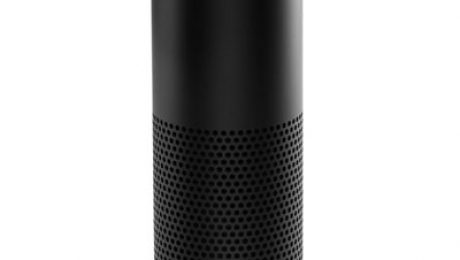
For those of you who haven’t seen the Amazon Echo in action yet, it can be quite an eye opener. We are quickly converging on an environment that was not long ago considered science fiction. The Echo can quietly sit in the corner of your room, waiting for anyone in the family to give it a command, whether it’s to play some music, check the weather or order something from (surprise surprise!) Amazon. It’s also a perfect example of technology racing ahead of the law, and unlike the ongoing controversy around email and ECPA, the stakes are much higher because of who is allegedly at risk: our children. I’ll admit that this may seem a bit melodramatic, but the Guardian US isn’t wrong when pointing out that Echo and other products like it (think Apple’s Siri and Google Now) might actually be in violation of COPPA. For those of you in the room who are not lawyers, this is the Children’s Online Privacy & Protection Act of 1998 which, among many things, prohibits the recording and storage of a child’s voice without explicit permission of their parents or legal guardian.
What this means for you:
Even though I am a parent of young child for whom COPPA was enacted to protect, it hasn’t been too hard to suppress the urge to disconnect and discard every voice-activated, internet-connected device we own (which would be quite a few, including my daughter’s precious iPad). As with many technology items that dance on the edge of privacy invasion, I weigh the convenience and value they bring against the loss of privacy and security they inherently pose. I do see the problems technology like this presents: thousands (possibly millions) of parents set down products like Echo and Siri right in front of their children precisely because using them is simple and intuitive, and in the case of Echo, they are actually designed for use by everyone in the family. However, most people probably don’t realize that today’s voice recognition technology relies on pushing recordings of voice commands to the cloud where they are cataloged and processed to improve algorithms. Not only do those recordings store our children’s voices, they are also thick with meta data like marketing preferences, “Alexa, how much does that toy cost?” and location data, “Alexa, where is the nearest ice cream shop?” I’m pretty sure none of us gave explicit permission to Apple before allowing our kids to use Siri on their iPads and iPhones. If you were to adhere to a strict interpretation of COPPA, Apple, Amazon and Google (as well as many others) have an FTC violation on their hands that could cost them as much as $16,000 per incident.
As for your Echo (or smartphone or tablet) – only you should judge whether it’s an actual risk to your child. For the moment, the law is unclear, and knowing our government, likely to remain so long after the buying public makes up its own mind.